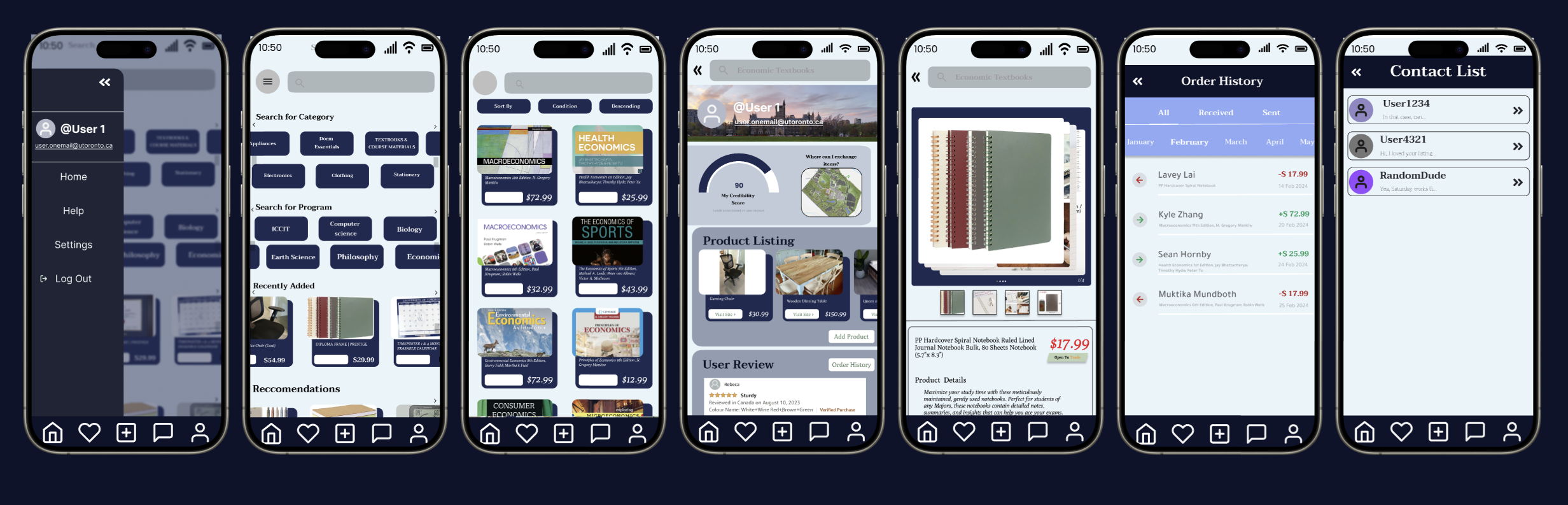
The trusted marketplace built for university students. A secure student-to-student marketplace designed to help university students buy, sell, and exchange academic and personal items within a trusted campus community.
University students regularly buy and sell textbooks, electronics, furniture, and academic supplies throughout the school year. However, existing platforms such as Facebook Marketplace, Craigslist, and Reddit are not designed specifically for campus communities.
Students often encounter challenges including unreliable product information, difficulty finding relevant local listings, and concerns surrounding transaction safety when meeting strangers.
As UTM students ourselves, our team experienced many of these frustrations firsthand. We saw an opportunity to create a marketplace specifically designed for students — one that prioritizes trust, safety, accessibility, and community engagement.
Design a platform that simplifies campus commerce while fostering a safer and more connected university community.
Before designing UniTrade, our team conducted a mixed-method UX research study to better understand how university students buy and sell items online, the challenges they face, and the features they would expect from a campus-focused marketplace.
We combined Contextual Inquiry (CI) and Participatory Design (PD) methodologies to uncover both existing user behaviors and desired future experiences.
Research Questions
We conducted contextual inquiry sessions with UTM students who regularly purchased or sold items through platforms such as Facebook Marketplace, Craigslist, Amazon, and the UofT Bookstore. Participants completed realistic marketplace tasks while verbalizing their thoughts through think-aloud protocols.
Students frequently expressed concerns about scams, fraudulent listings, and meeting strangers during transactions.
Participants struggled with incomplete descriptions, inaccurate listings, and difficulties verifying product quality.
Users reported frustration when searching for textbooks, electronics, and academic materials among unrelated listings.
Students preferred purchasing from fellow students because it created a stronger sense of reliability and accountability.
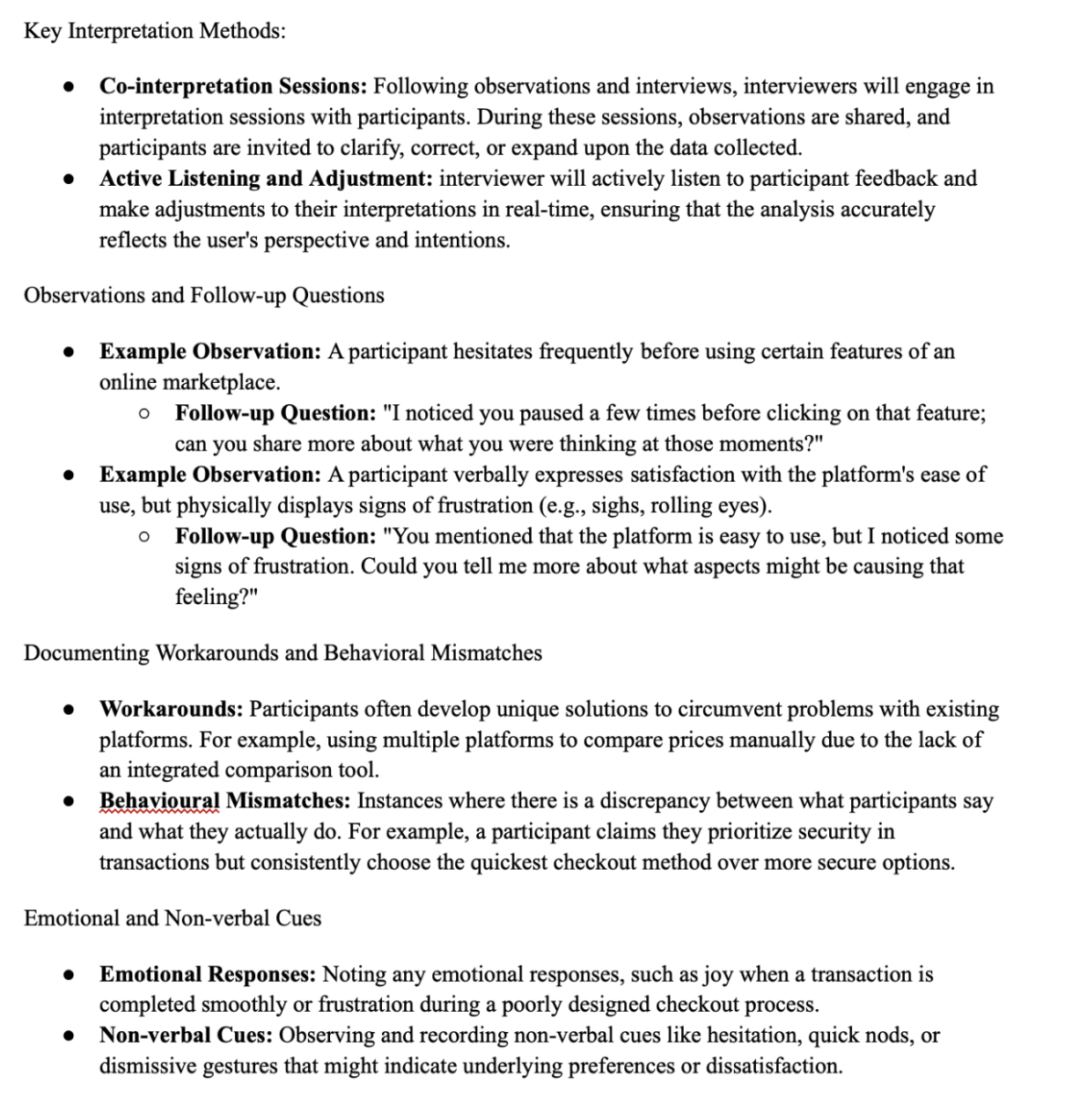
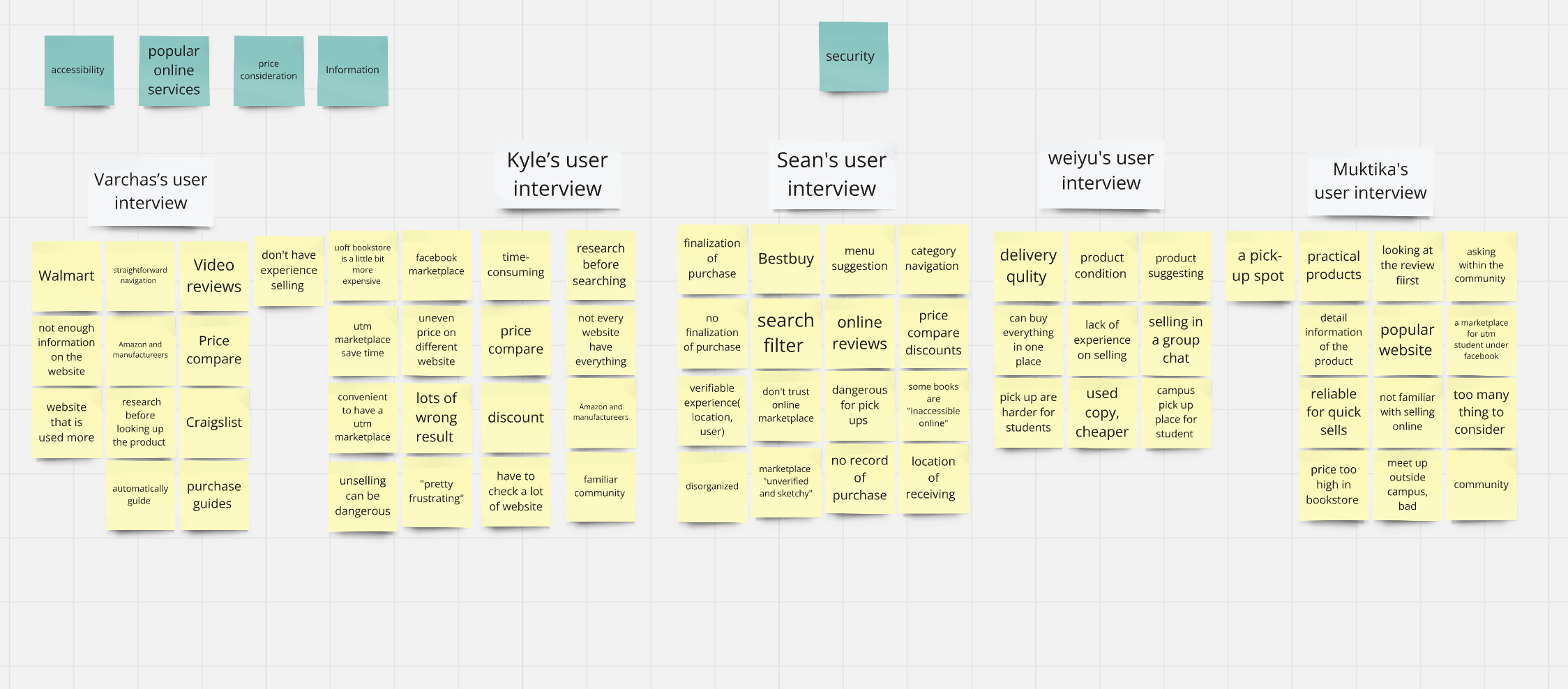
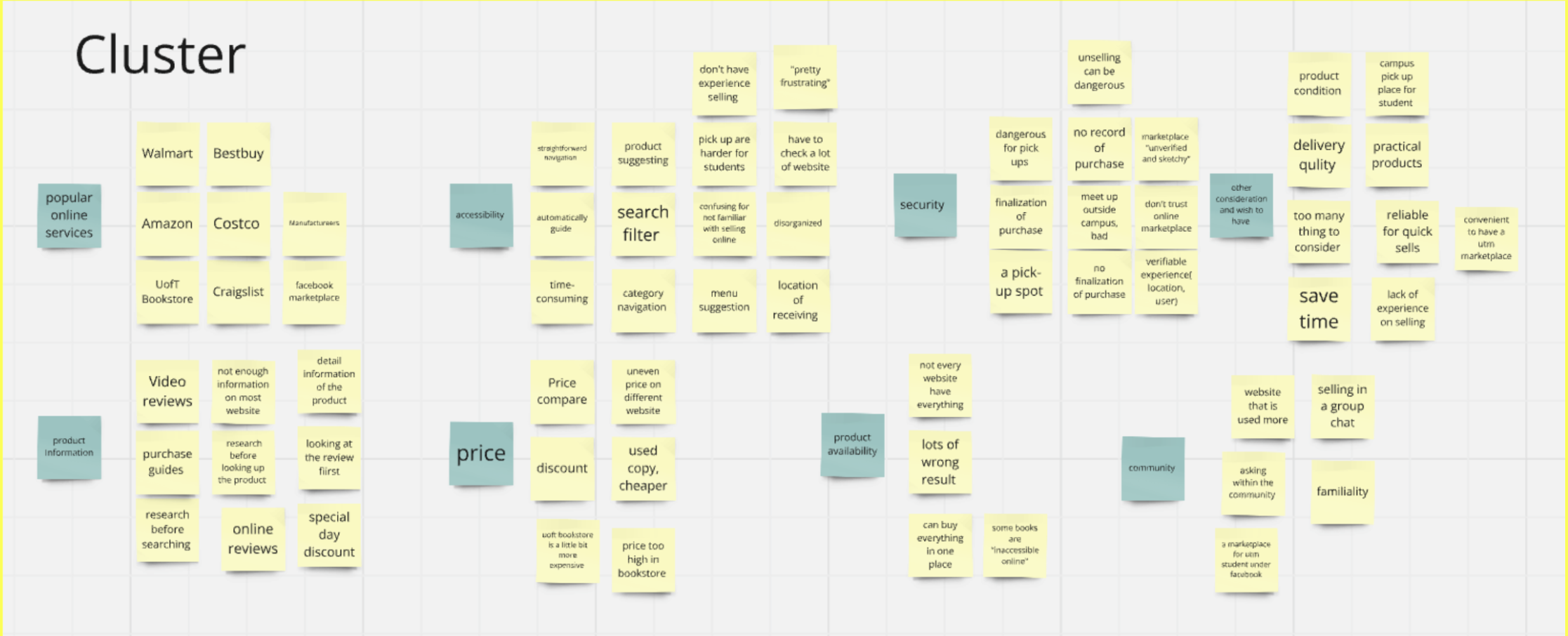
After transcribing and coding participant interviews, we conducted a thematic analysis to identify recurring themes across sessions.
Users wanted stronger verification systems and safer transaction processes.
Participants desired simpler interfaces and more effective filtering capabilities.
Detailed descriptions, ratings, and reviews were considered essential for informed decision-making.
Students preferred platforms that required minimal effort to browse and create listings.
Participants valued interacting with verified members of their university community.
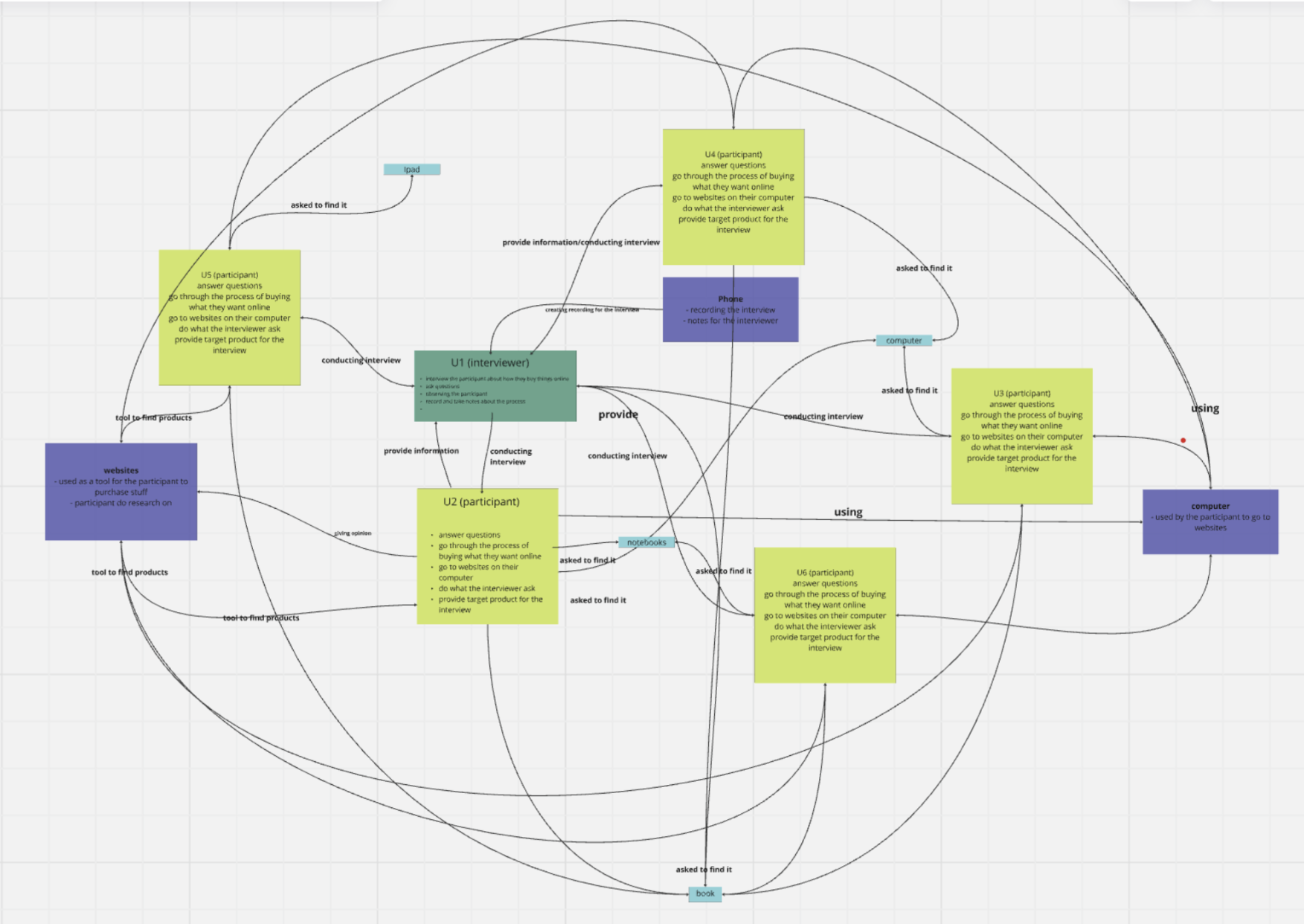
To better understand user behavior and marketplace workflows, we developed two work models that revealed friction points and opportunities for improvement.
Mapped the step-by-step process users follow when searching for, evaluating, and purchasing products. This model highlighted friction points where users became confused or abandoned tasks.
Illustrated how information moved between buyers, sellers, and marketplace systems. The model revealed opportunities to improve communication, trust, and transaction efficiency.
.png)
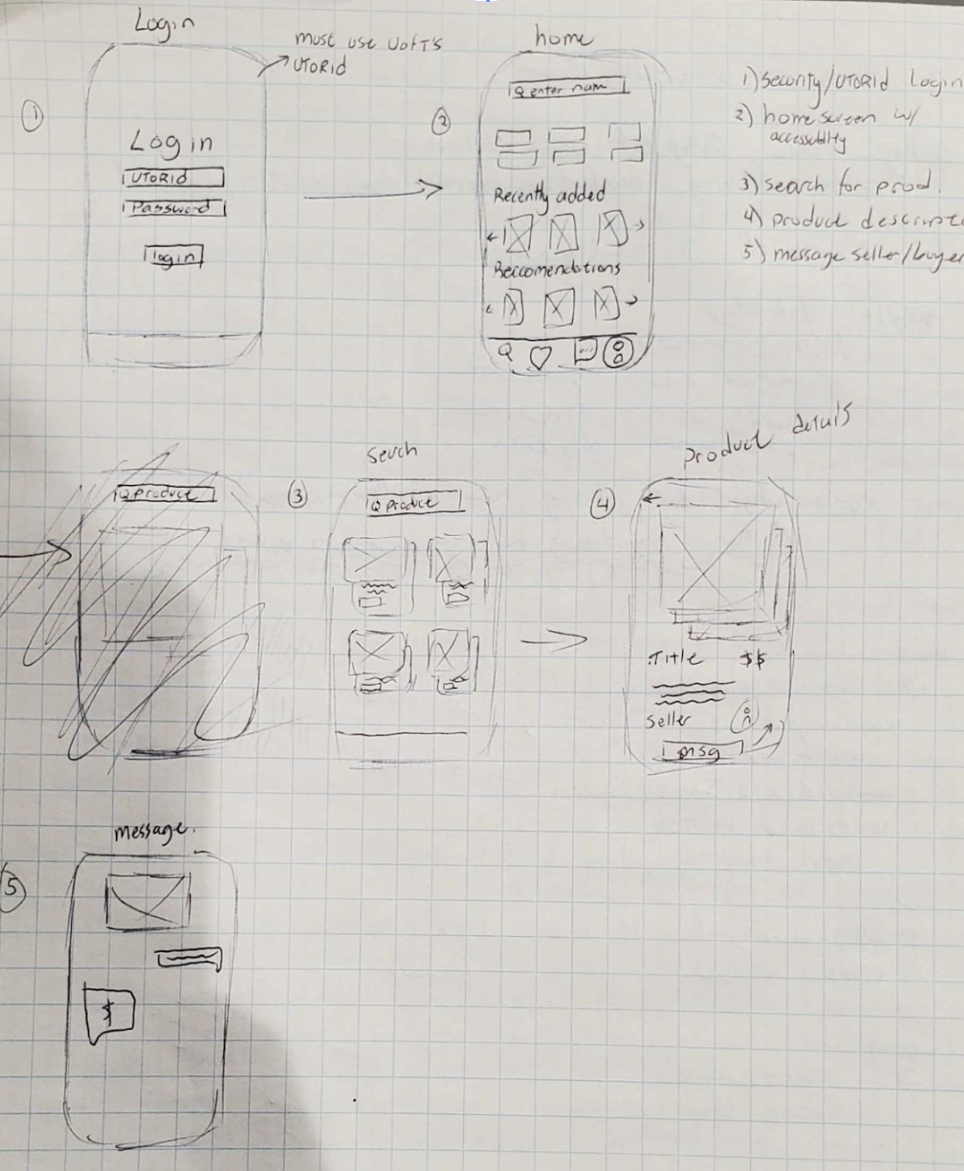
After identifying key pain points, we invited students to participate directly in the design process. Participants interacted with medium-fidelity prototypes and completed realistic marketplace scenarios while providing feedback and suggestions.
Participants searched for and purchased items using the redesigned marketplace navigation system, highlighting what felt intuitive and where confusion arose.
Participants created listings and completed a simulated transaction using security features such as UTORID verification and designated campus exchange locations.
Security features were viewed as necessities rather than optional enhancements. Without trust, no other feature mattered.
Students prioritized quick navigation and efficient browsing over feature-heavy interfaces. Every extra step was a potential drop-off.
Users preferred buying and selling within a verified student network where accountability and trust naturally existed.
Our research revealed that existing marketplaces failed to address the unique needs of university students. Students lacked:
The challenge was not simply creating another marketplace — it was designing an ecosystem that students could trust.
Based on our findings, we identified several key features for the first version of UniTrade.
Users authenticate using their UTORID, helping reduce fraud and establish trust between buyers and sellers.
Designated campus pickup points provide safer transaction experiences for all parties.
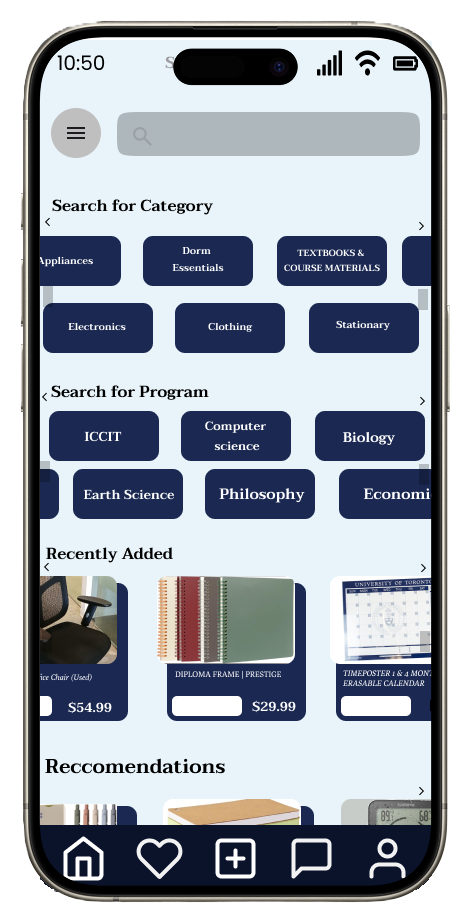
Students can quickly locate textbooks, electronics, furniture, and academic resources.
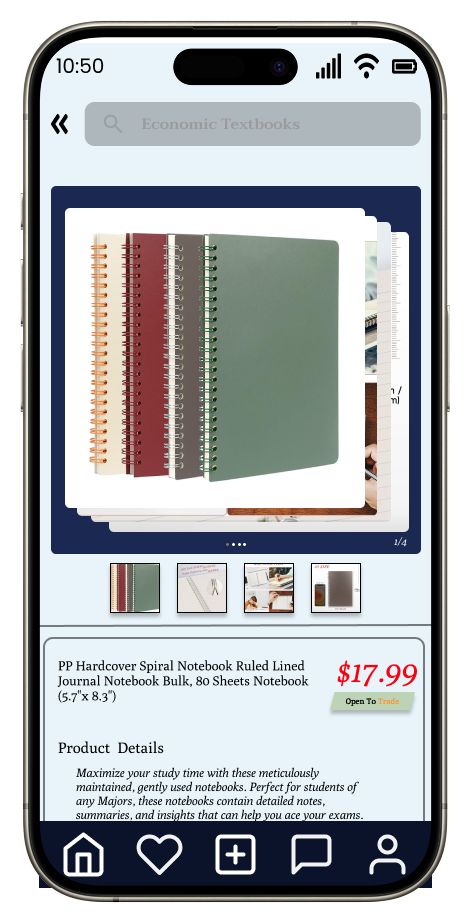
Transparent feedback systems help users make informed decisions about sellers and products.
A simplified information architecture enables users to complete tasks with minimal effort.
 Search
 Listing
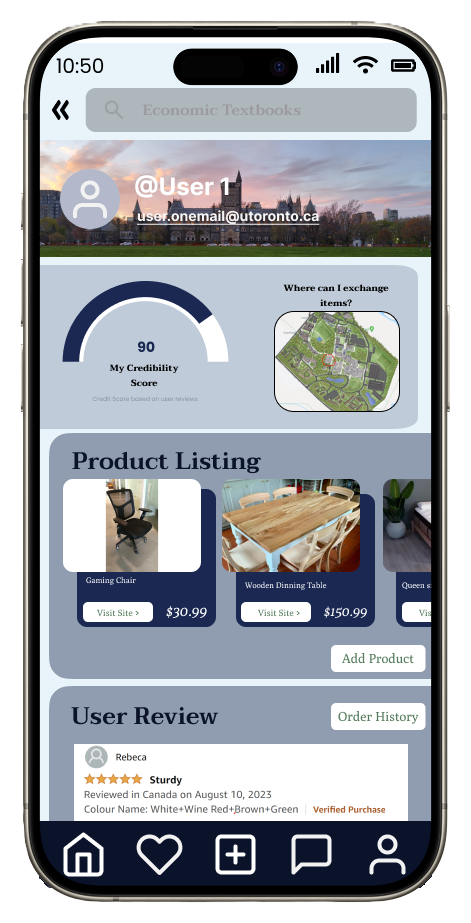 Profile
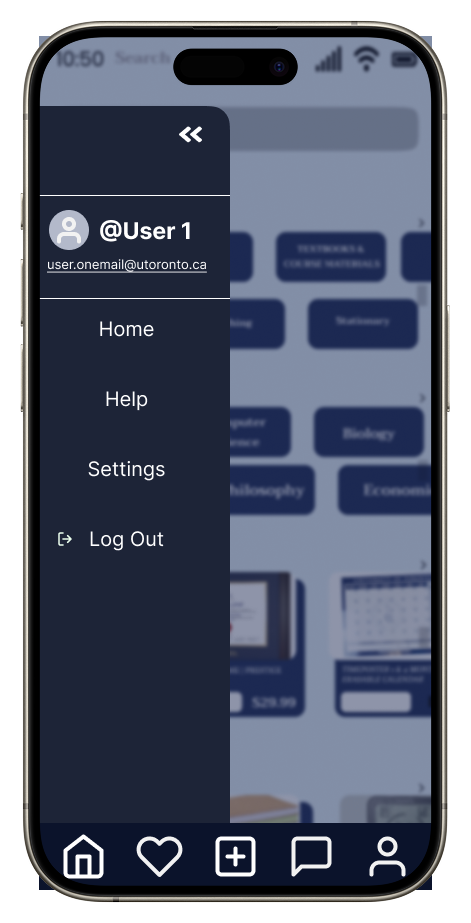 Menu
Menu
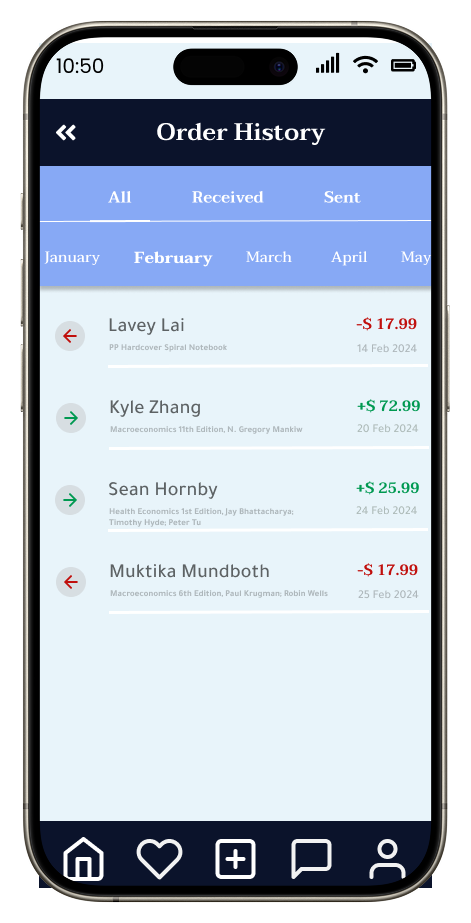 Orders
Throughout the project, our team encountered several challenges that tested our design thinking.
While some participants appreciated interfaces similar to Amazon, others felt those designs appeared too formal and corporate for a student marketplace. We had to find a tone that felt trustworthy without feeling cold.
Users requested advanced functionality, but excessive complexity risked reducing usability. These insights encouraged us to focus on simplicity while ensuring core marketplace functionality remained powerful and accessible.
Before committing to a visual design, we mapped the complete information architecture and user flows across every screen and interaction state. This gave the development team a clear blueprint and ensured no edge cases were missed.
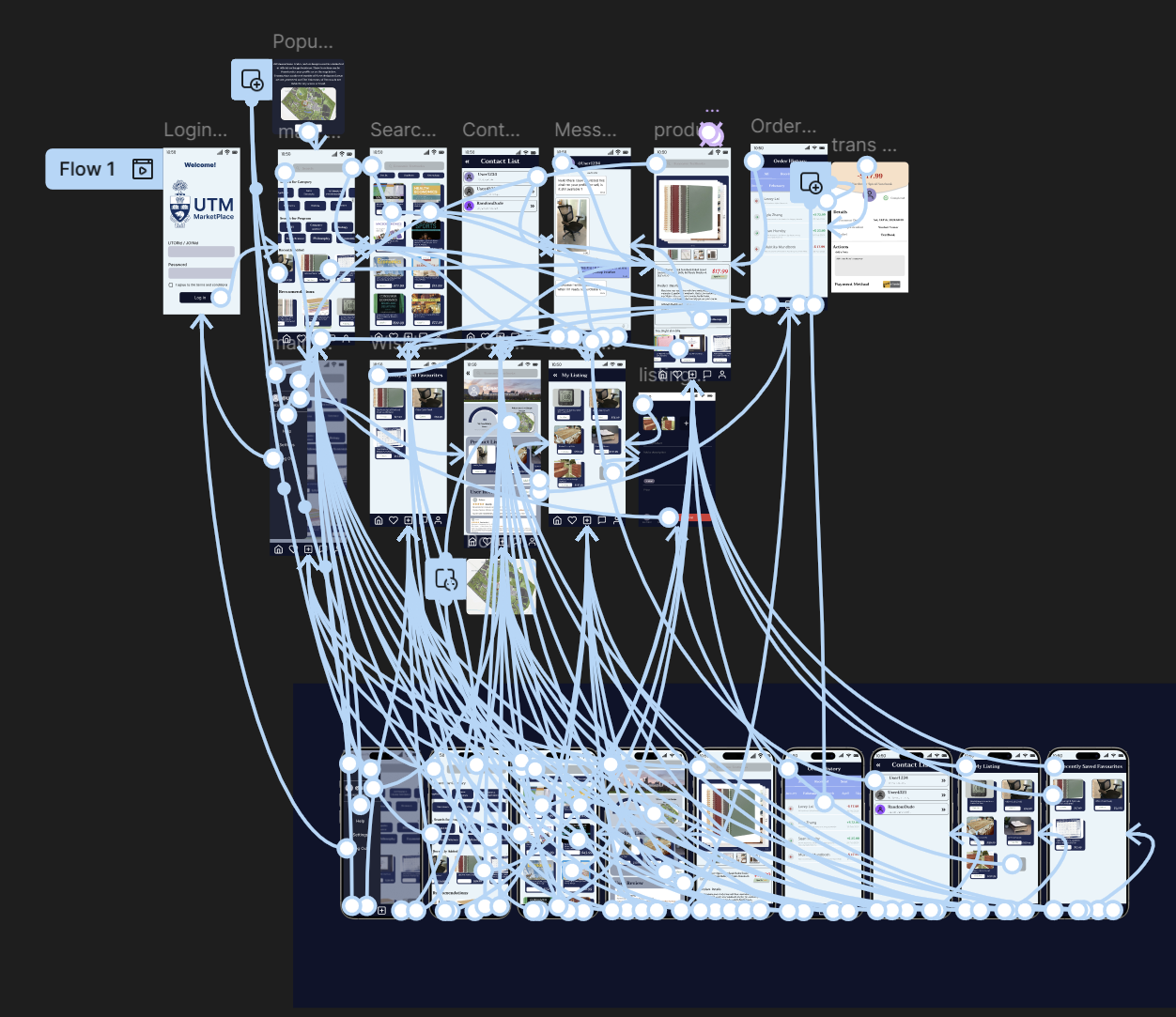
Based on our research findings, we established five key design principles that would govern all future design work on UniTrade.
Provide clear pathways to core marketplace functions and minimize cognitive load.
Implement verification systems and safe transaction practices to build and maintain user trust.
Continuously involve users throughout the design process to validate decisions and surface blind spots.
Support transparent communication between buyers and sellers at every stage of a transaction.
Protect user information through secure authentication and responsible data handling practices.
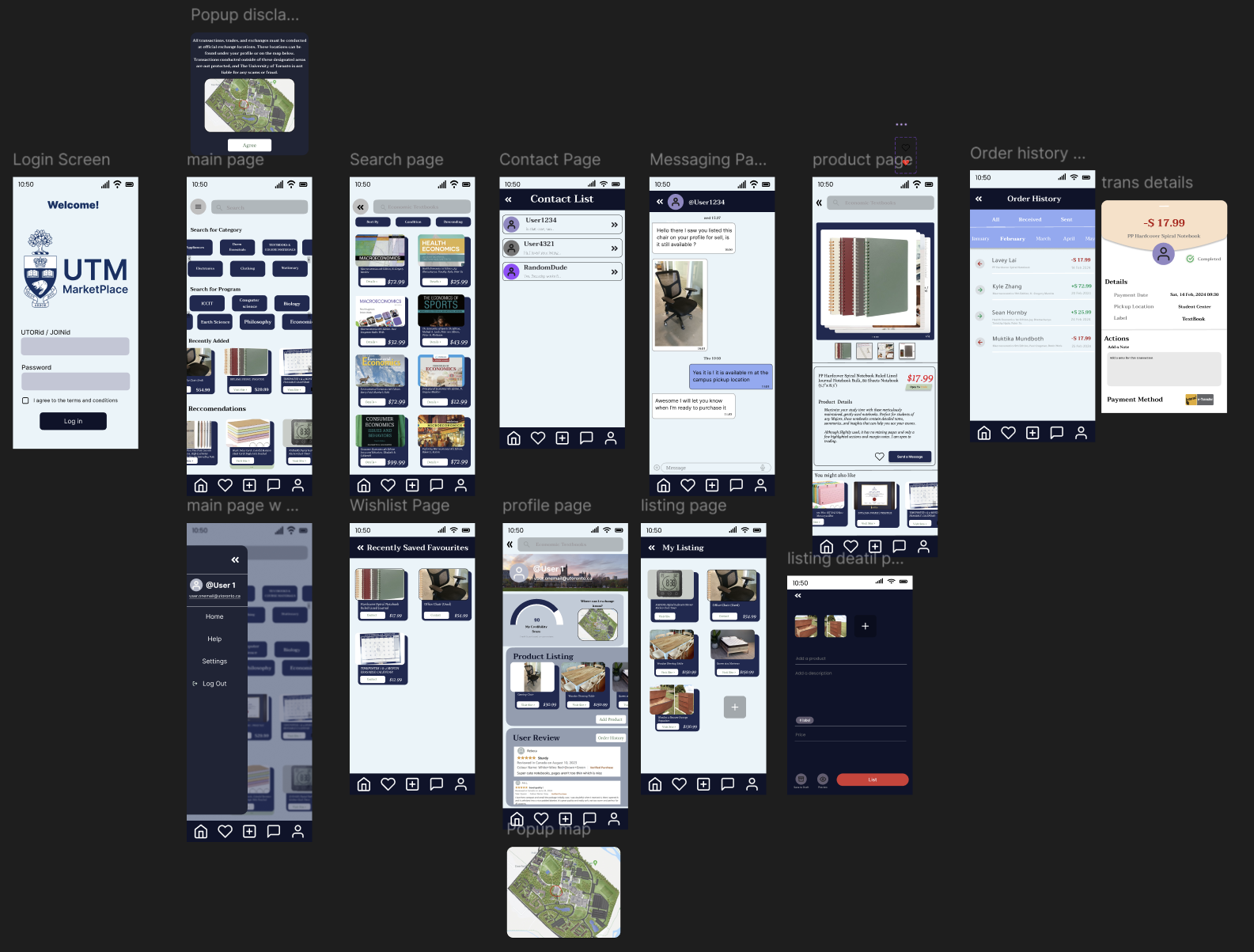
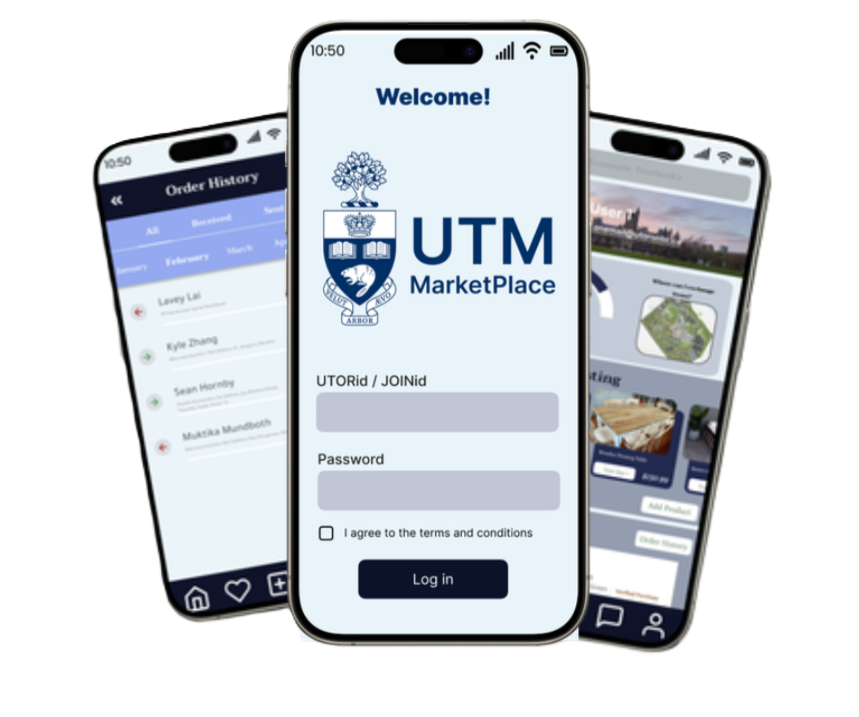
The final UniTrade prototype integrated findings from both Contextual Inquiry and Participatory Design into a cohesive marketplace experience. By focusing specifically on the needs of university students, UniTrade addresses many of the frustrations and risks associated with traditional online marketplaces.
Contextual Inquiry revealed real-world user behaviors, while Participatory Design uncovered future user expectations and opportunities that observation alone couldn't surface.
Security and verification are not simply supporting features — they are central to marketplace adoption. Users will not engage with a platform they do not trust.
Many of our most impactful improvements originated directly from participant feedback rather than internal assumptions about what students needed.
Balancing functionality and usability requires constant prioritization and refinement. Removing a feature is often harder — and more valuable — than adding one.
Through contextual inquiry, participatory design, thematic analysis, and iterative prototyping, our team created a marketplace tailored specifically to the needs of university students. The project reinforced the importance of involving users throughout the design process and highlighted how trust, accessibility, and community can become powerful drivers of product success.
Trade Smarter. Study Better.