
An educational strategy game designed to help high school students and newcomers understand Canada's federal election process through interactive storytelling, campaign management, and hands-on voting simulations.
Many young Canadians and newcomers have limited exposure to how federal elections actually work. While information about voting is publicly available, the election process can feel complicated, intimidating, and difficult to understand through traditional educational materials.
Working with the Glocal Foundation, our team identified an opportunity to transform civic education into an engaging interactive experience.
Help players learn how Canadian elections work by allowing them to actively participate in the process rather than simply reading about it.
Before designing the game, we researched common barriers to civic engagement among youth and newcomers. We identified several challenges:
Our challenge was to create a learning experience that remained educational while still feeling like a game.
To teach players the complete election journey, we designed the game around four major stages.
The game begins when Parliament is dissolved and an election is called. Players learn about Canada's political system, election timelines, and the role of political parties while selecting their candidate identity.
Players take on the role of a political candidate and must manage limited resources — time, budget, and public approval — through rallies, advertisements, media interviews, and citizen engagement.
Inspired by document-verification gameplay, players temporarily assume the role of an election worker — guiding voters through the process, verifying eligibility, and resolving accessibility concerns.
Winning the election is only the beginning. Players must balance campaign promises, citizen expectations, and government stability by selecting policies that influence public trust and long-term success.
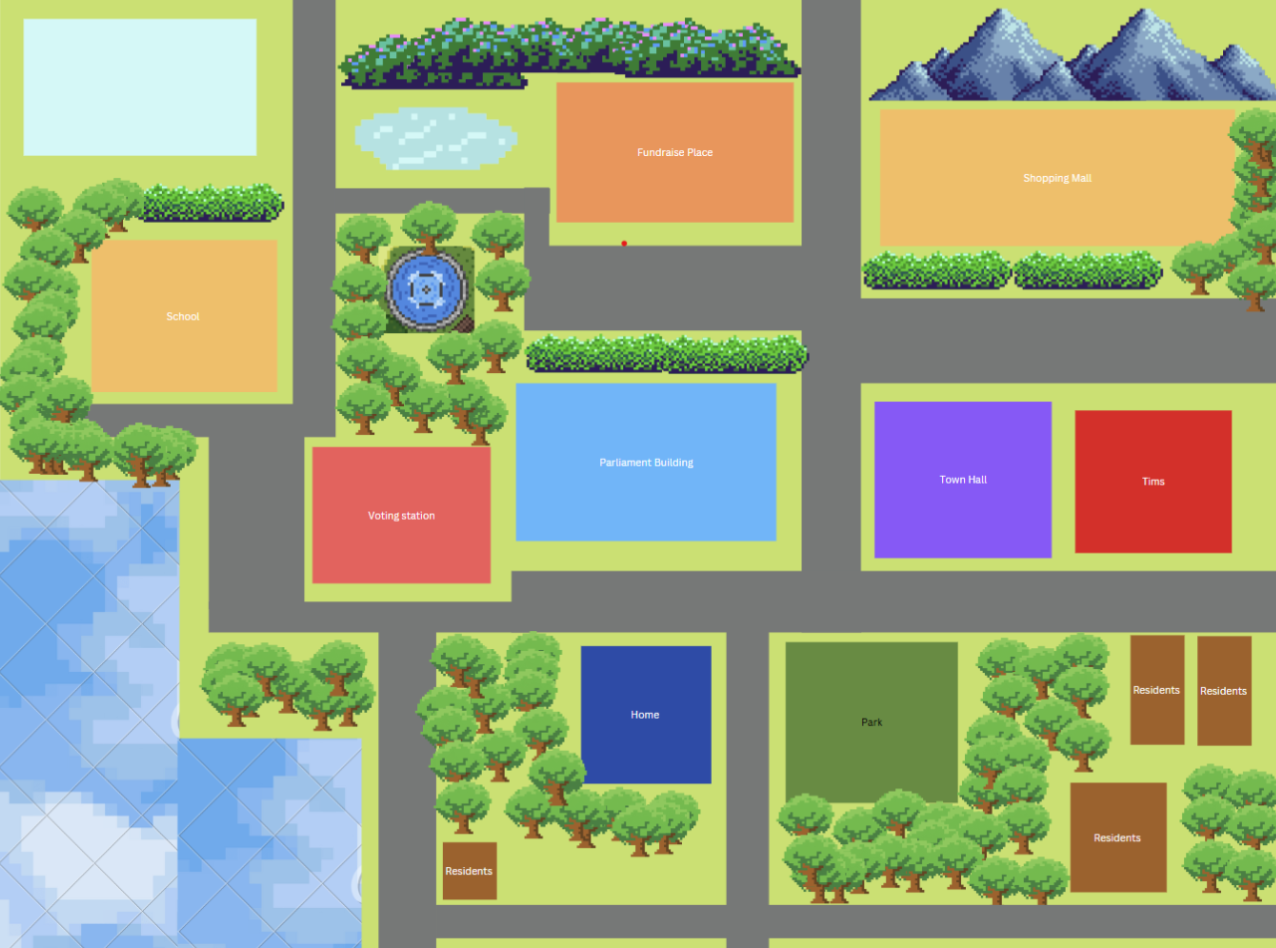
Rather than a strictly linear experience, we designed an open-map structure that allows players to explore different election-related locations. Each location introduces a different aspect of the democratic process while maintaining player agency.
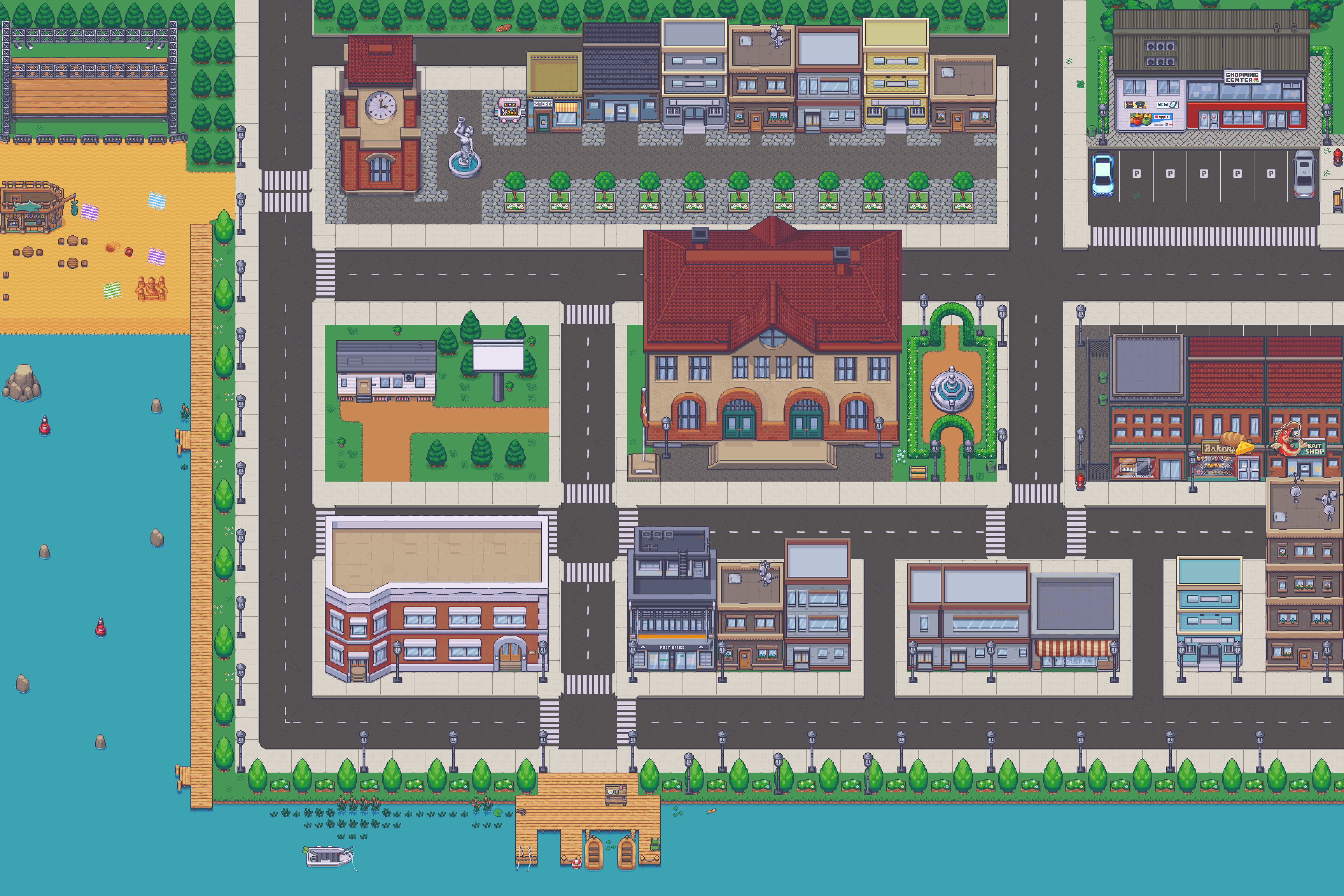
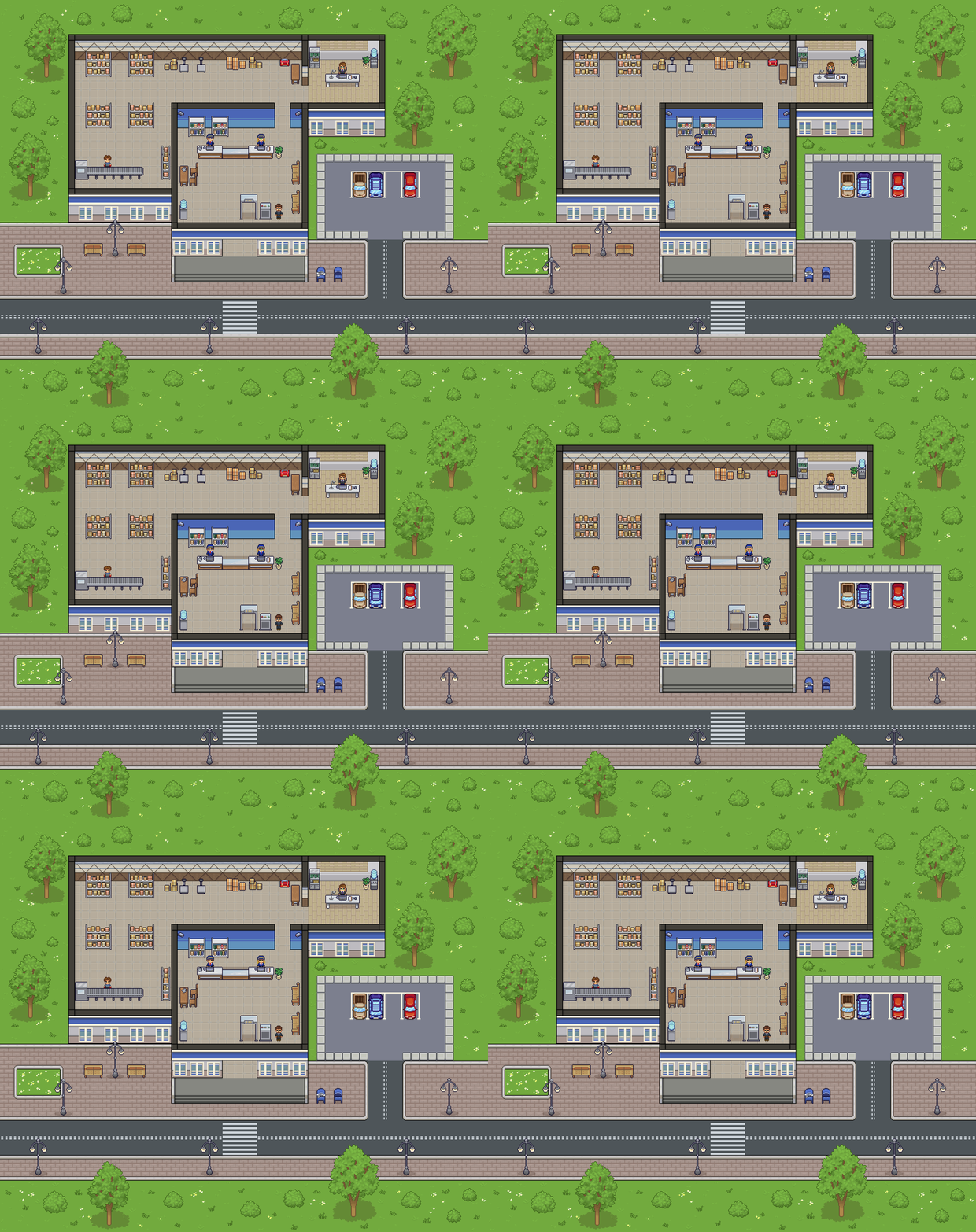
One of the most detailed environments in the game, the polling station immerses players in the Voting Day experience — from checking voter identification to guiding citizens through accessible booths.
One of the most complex systems we designed was the campaign management mini-game. Players begin each week with a fixed budget, limited campaign time, an approval rating, and weekly action points — requiring constant strategic trade-offs.
Campaign activities include mini-games such as media interview responses, town hall Q&A sessions, and policy-based decision making — encouraging players to think critically about communication and public engagement.
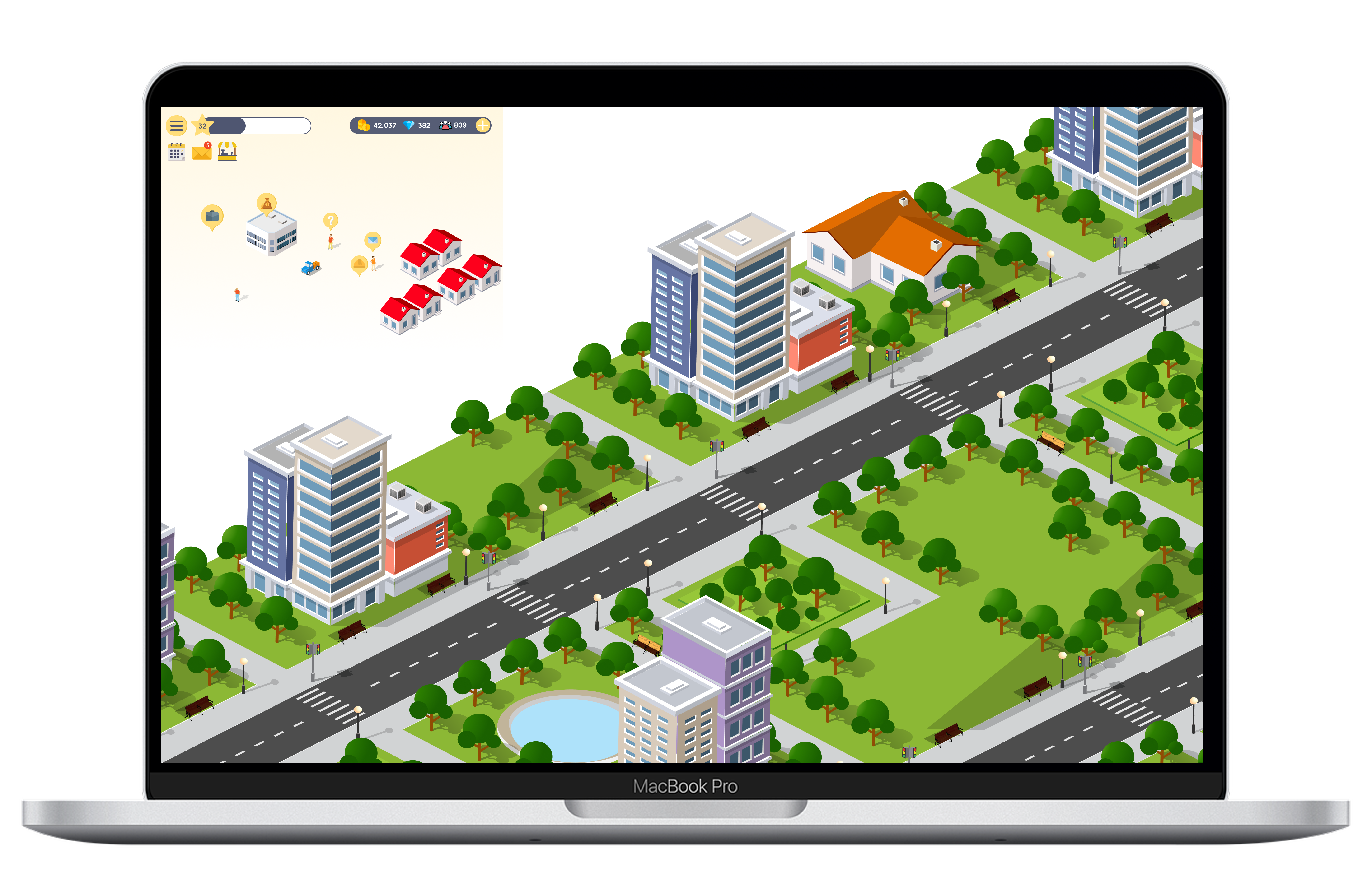
A walkthrough of the Democracy Park game world — exploring key civic locations and the open-map navigation system.
A major focus of the project was ensuring the game accurately represented the Canadian democratic process. We researched federal election procedures, voter eligibility requirements, polling station operations, campaign regulations, and government formation processes.
The educational content was integrated directly into gameplay to avoid overwhelming players with large amounts of information at once.
The game was intentionally designed to support diverse audiences — from high school students experiencing a first election to newcomers learning Canadian civic life.
Full English and French language options throughout the game.
Complex election concepts broken down into digestible, interactive moments.
Hands-on participation replaces text-heavy explanations and passive reading.
Scenarios designed to reflect the experience of learning civic processes for the first time.
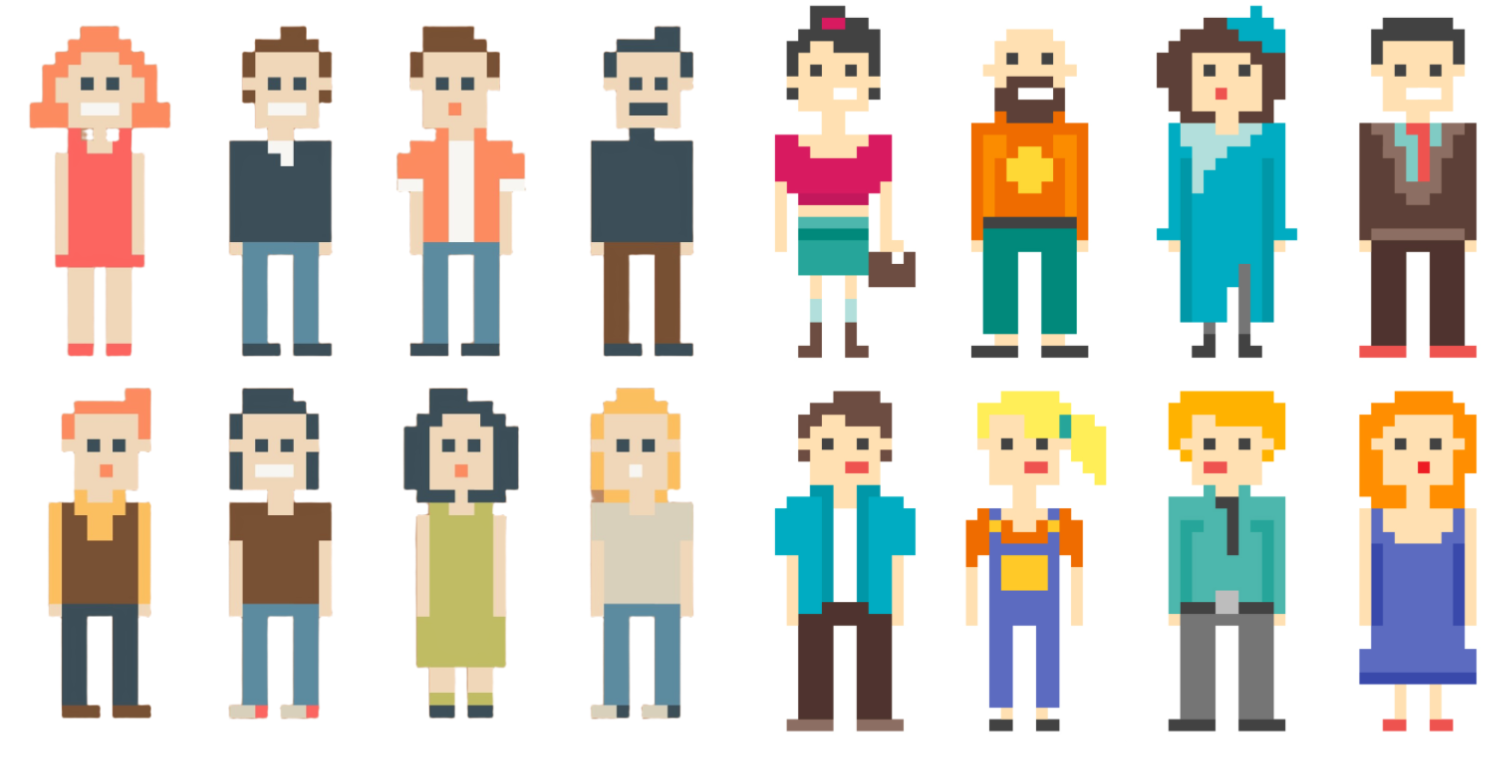
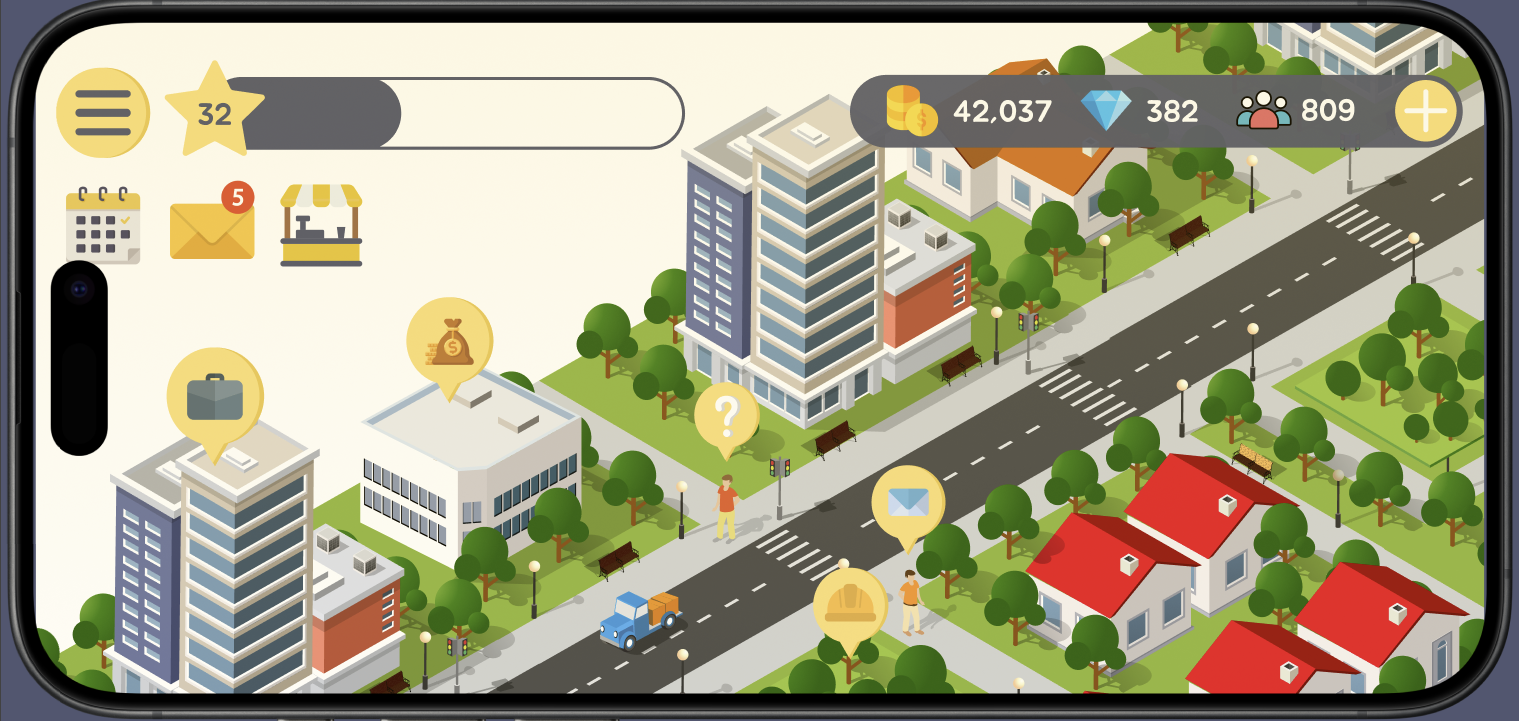
To evaluate the experience, we developed an initial playtesting plan focused on session length, educational effectiveness, player engagement, and system clarity.
Our primary hypothesis was that the complete experience would take approximately 15–20 minutes — allowing it to fit within classroom environments.
Players retain information more effectively when they actively participate rather than passively consume content.
Resource management mechanics provided a natural way to demonstrate the trade-offs involved in political campaigning.
Framing educational content within a meaningful story significantly improved player motivation and retention.
Designing for newcomers and younger audiences required simplifying complex processes without sacrificing accuracy.
The Glocal Election Game was created to make civic education more engaging, accessible, and memorable. By helping players experience the responsibilities of candidates, voters, and election workers firsthand, the project encourages informed participation in democracy and promotes a deeper understanding of how every vote contributes to Canada's future.