
A narrative-driven puzzle adventure game that explores themes of memory, identity, regret, and self-discovery through an infinite library suspended between life and death.
I've always been fascinated by stories that explore the relationship between memory, identity, and the choices that shape our lives. Inspired by speculative fiction and atmospheric storytelling, I wanted to create a game that combined environmental exploration with emotional narrative discovery.
The result was Not-Real-Human BookClub — a first-person puzzle adventure set within an infinite library existing outside of time and space. Players slowly uncover the truth about themselves through exploration, clues, and fragmented memories.
Create an immersive narrative experience where players uncover a mystery while reflecting on the impact of life's choices.

Unlike traditional puzzle games that focus primarily on mechanics, this project centered on emotional storytelling. The player takes control of Eury Dyce, a 25-year-old woman suffering from amnesia who awakens inside a mysterious library. A shadowy figure known only as The Librarian guides her through a world where time has stopped at midnight.
As players explore, they are confronted with increasingly important questions:
The setting is an infinite library existing beyond conventional reality. The world follows familiar physical laws, but with subtle alterations that create a dreamlike atmosphere.
The clock never moves. The library exists in permanent, eternal stillness.
Characters do not require sleep, food, or water — signaling displacement from ordinary life.
Lighter movement encourages vertical exploration and creates a floating, surreal sensation.
A persistent, subtle narrative clue hidden within the atmosphere — important to the final reveal.
Rather than delivering the story through cutscenes, I focused on environmental storytelling. Each section of the library represents a different fragment of Eury's memories — players uncover information by exploring shelves, reading books, and collecting hidden clues.
Earliest memories — faded, detached, unresolved.
Moments of comfort, growth, and connection.
Everyday life — the ordinary made significant by context.
Chaos, conflict, regret — the emotional turning points.
Resolution and clarity — the final truth waiting to be found.
The primary gameplay loop combines exploration, puzzle-solving, and narrative discovery. By linking gameplay progression directly to narrative progression, every clue found carries emotional weight.
Explore the library
Search books for hidden clues
Solve environmental puzzles
Uncover Eury's forgotten memories
Find the Last Book — and the truth
The 3D environment was constructed in Unity, translating the narrative zones into explorable spatial experiences. Each development screenshot captures a different stage of the library's construction — from early blocking to full bookshelf architecture.
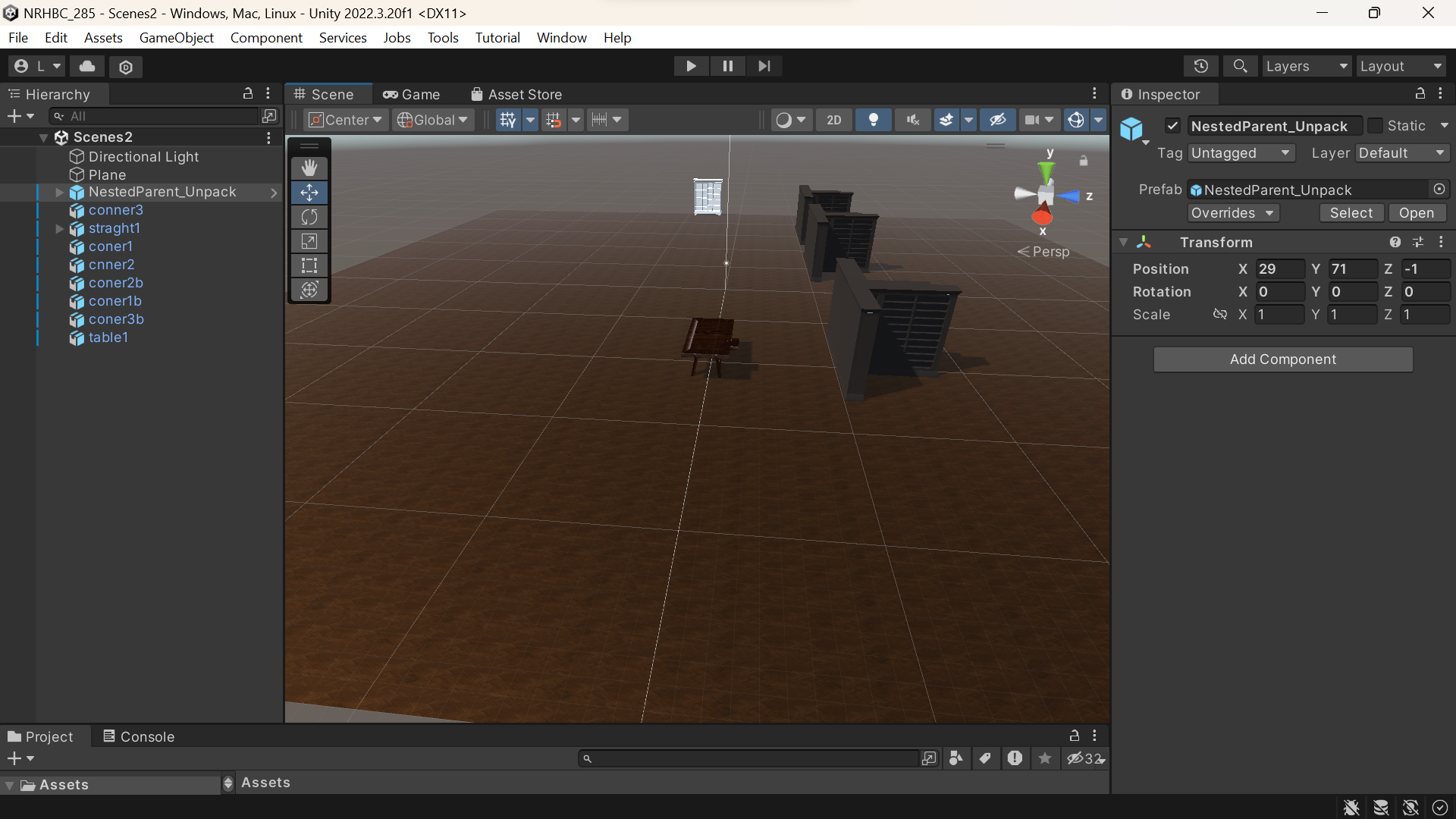
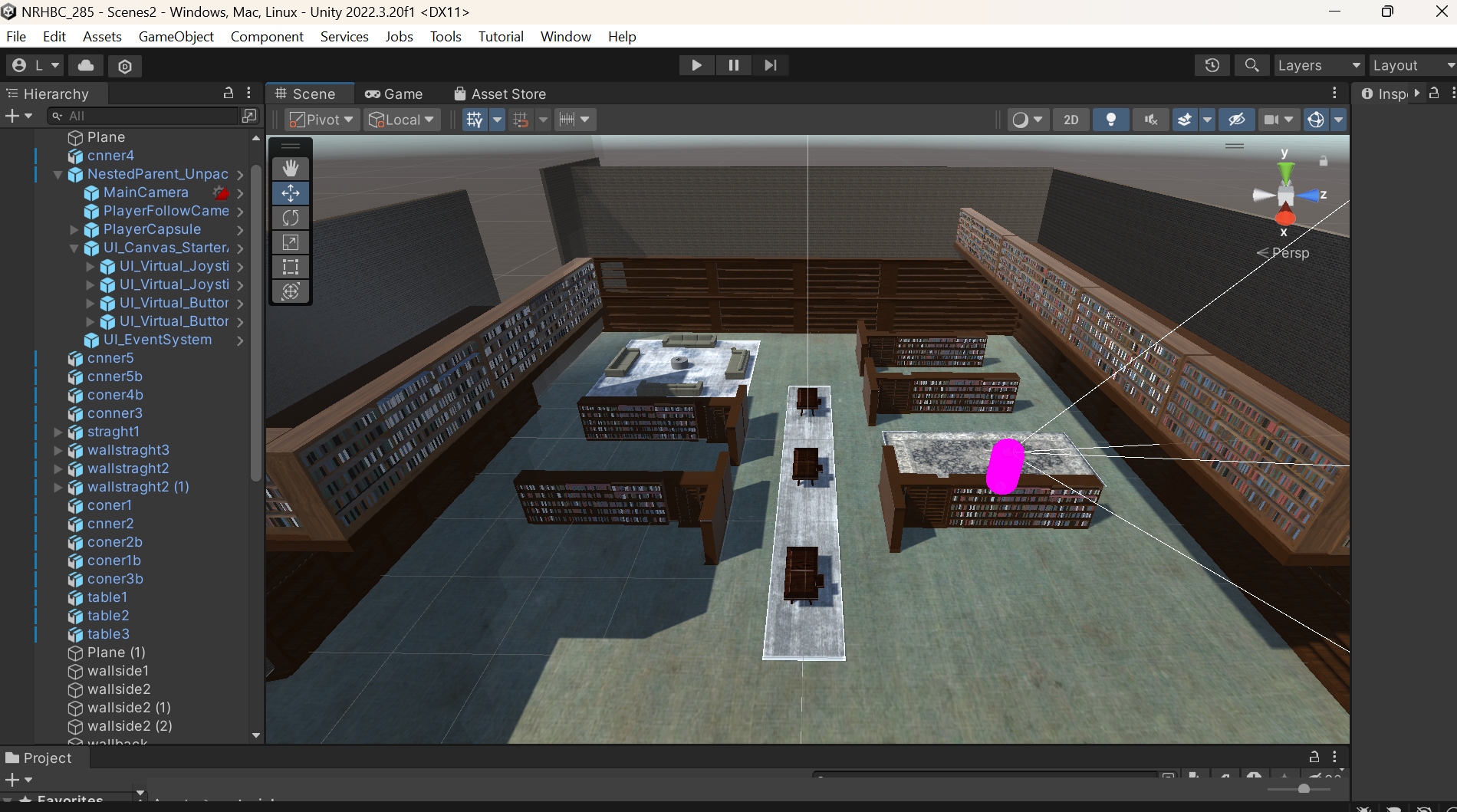
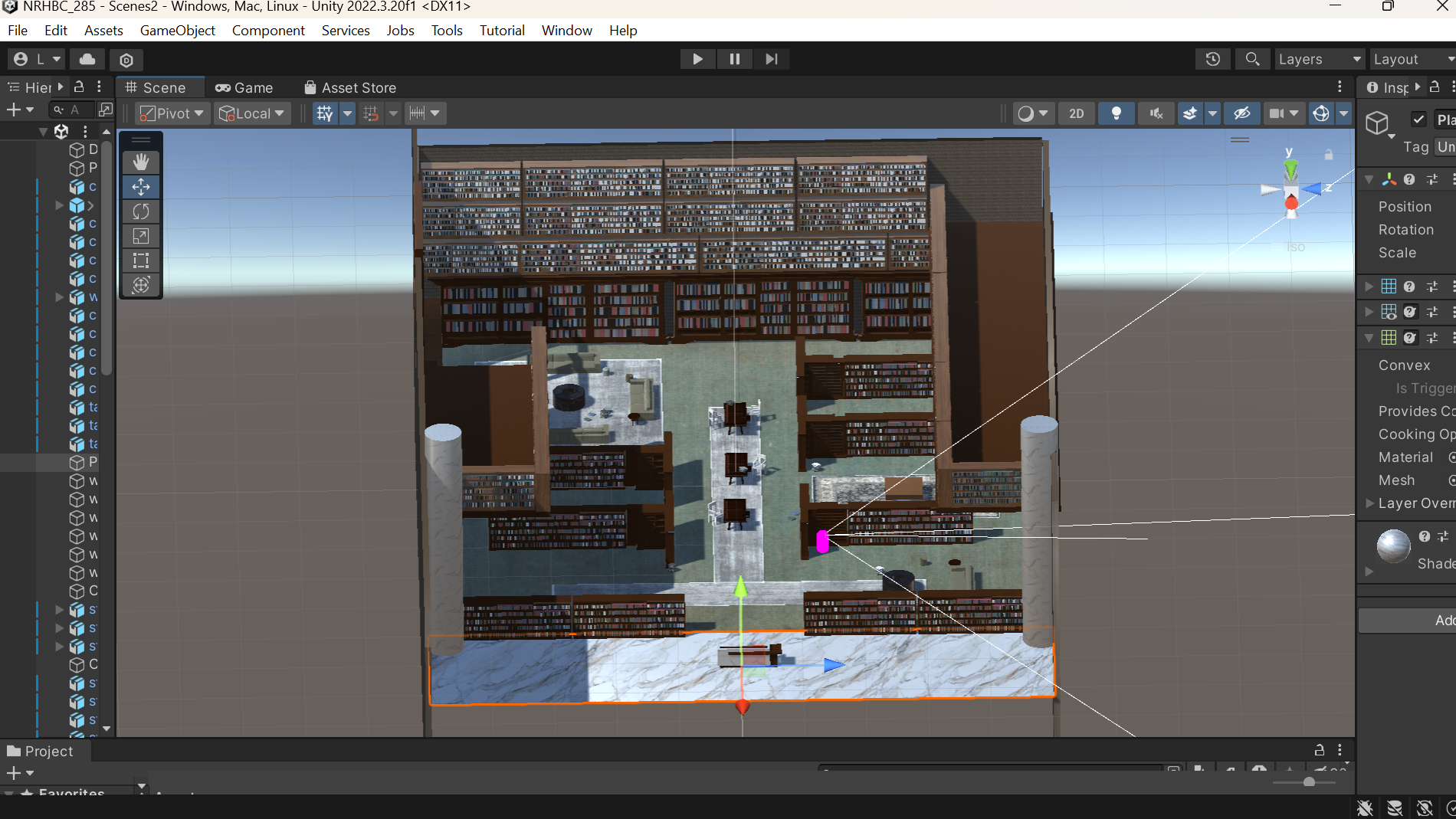
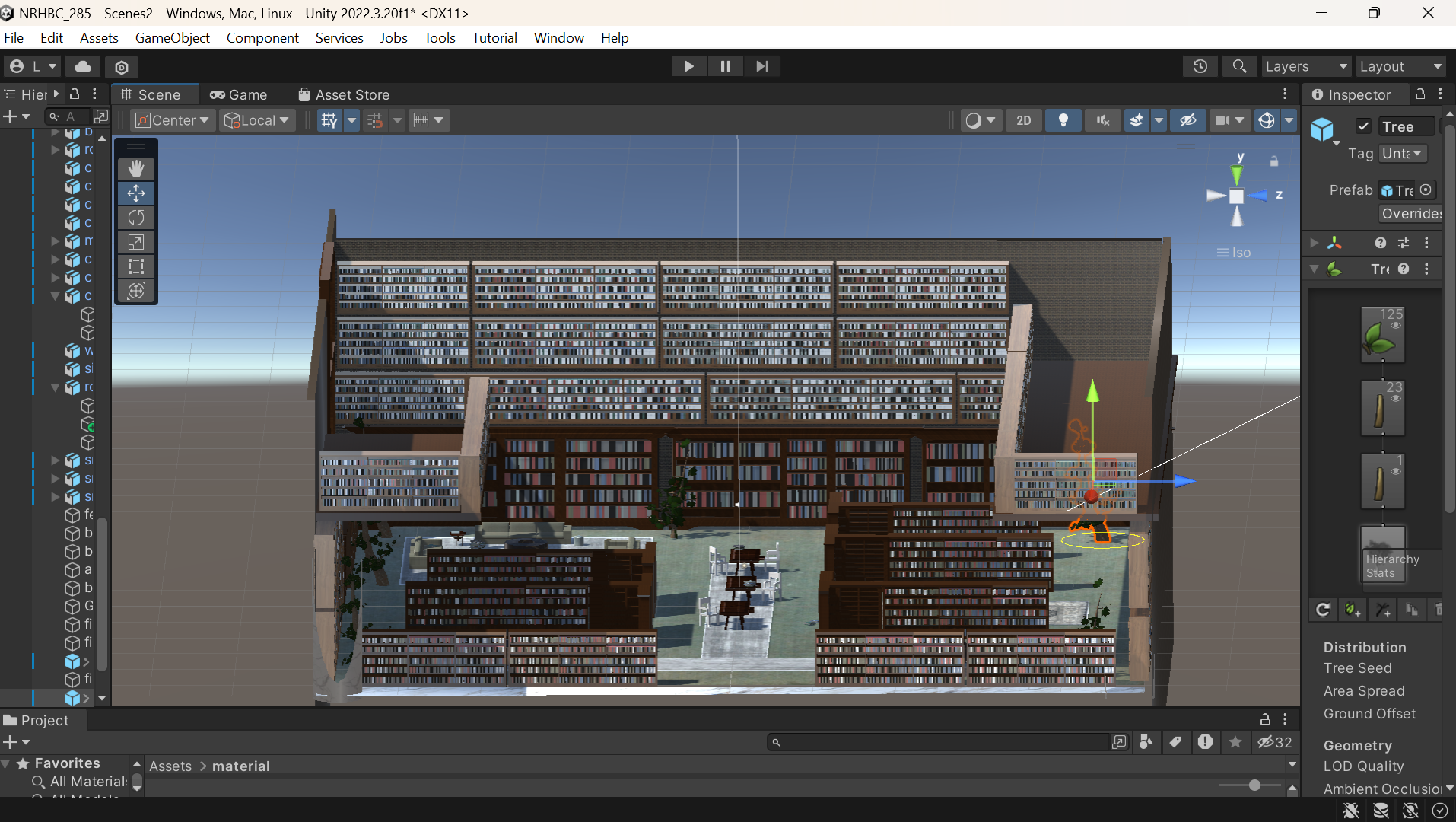
A first-person walkthrough of the Not-Real-Human BookClub library environment — built in Unity and captured in 360°.
The visual direction was heavily inspired by libraries found in fantasy literature and atmospheric exploration games. I researched library architecture, book layouts, and environmental storytelling techniques to create a setting that felt both expansive and intimate.
Visual moodboard research drew from the library environment in Stray — particularly its use of vertical shelving, winding pathways, and atmospheric lighting. Concept explorations covered shelf arrangements, reading alcoves, environmental landmarks, and the distinct visual language of each memory zone.
Audio played an important role in establishing the feeling of existing within a timeless, reflective space. The soundscape layers environmental and musical elements to reinforce emotional immersion.
The project was primarily inspired by the novel The Midnight Library by Matt Haig, which explores alternate lives and the consequences of personal choices. I was particularly interested in adapting its emotional themes into an interactive medium — allowing players to uncover the story themselves through exploration rather than passive observation.
The concept also drew from how real-world libraries are represented in games as spaces for reflection, mystery, and learning — places where time feels suspended and every corner holds a potential discovery.
World design communicates narrative information without relying on dialogue or exposition — the space itself carries meaning.
Giving players unanswered questions encourages curiosity and deeper engagement with the world they're inhabiting.
Visual design, sound, environmental clues, and world rules work together to create emotional immersion that no single element could achieve alone.
Establishing clear rules for a fictional world makes even surreal environments feel believable and internally consistent.
Not-Real-Human BookClub explores how interactive media can encourage players to reflect on memory, identity, and the choices that shape who we become. By combining environmental storytelling with puzzle-driven exploration, the project demonstrates how games can create meaningful emotional experiences while encouraging curiosity, empathy, and self-reflection.